Friday, September 25, 2009

Happy Spring!

Since surfing class was cancelled today (I don't know why the instructors thought someone of my talent and ability couldn't handle the crazy waves after several huge rainstorms, but that's another story), I have devoted my day to reading Amor de perdição. I'm supposed to have read it by Monday, and I'm on chapter 2 (out of 20), and I have to give a presentation to my class on chapter 18 on Wednesday. And since I read the chapter and a half that I have read on the bus, I didn't look up any words and thus have only a vague idea of what's going on (it's kind of a Portuguese version of Romeo and Juliet, though written in prose -- and I feel like a Shakespeare reader who only two years ago didn't know a single word of English). So obviously that's going well.

Hence today's post. I've been promising it for a few days, and you all know there's nothing I like better than a little procrastination.

The last day of winter came this week, while I was busy recovering from an unfortunate attempt at an obstacle course (more on that later). I have officially spent, what, six months in winter in the year 2009? And since I'm planning on leaving Brazil on December 16, I'll be out of here before summer even technically arrives. So in all of 2009, I'll have spent approximately two weeks in summer (and less than one in autumn -- and can you really count December in Maine as autumn?). What a year!

The first week of spring started off with a bang: a presentation in front of my Brazilian Literature class. And since, for reasons impossible to understand, no Brazilians wanted us in their group, five of us Americans in the class made our own group. And guess what? We owned them (besides the speaking correct, grammatical Portuguese part of course).

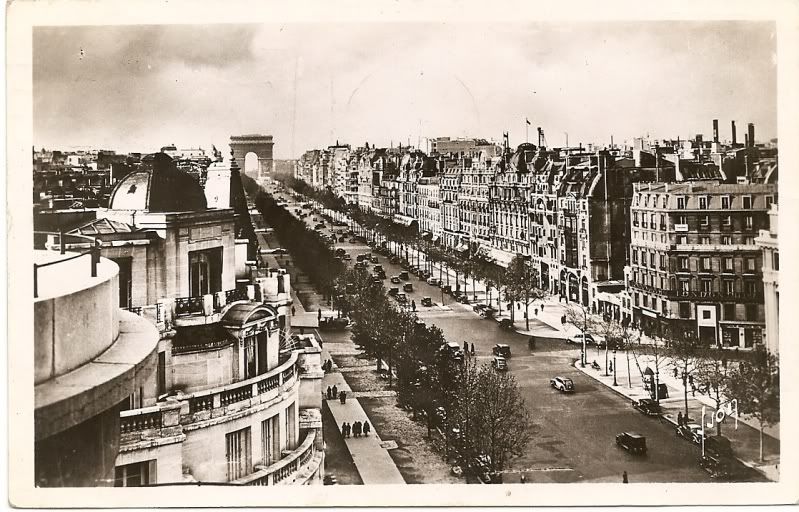
My part of the presentation involved talking about how different authors reacted to the modernization (most French-ization) of Rio de Janeiro at the turn of the century. Since being French was very chic and à la mode at the time, the government decided to build several institutions, like the Municipal Theater and the National Library, based on French architecture. Even the Avenida Rio Branco, a main avenue through centro, was styled after the Champs-Élysées (the names link to a cool comparison of old postcards). The authors I discussed pointed out that there were bigger problems to deal with in Rio, and that most of its citizens couldn't even  afford to benefit from things like theater. The title of our presentation, a quote from Orestes Barbosa, was "Há, sem dúvida, duas cidades no Rio." There are, without a doubt, two cities in Rio.

Things aren't much different today. There's the city I live in -- tall apartment buildings, some quite beautiful, many on the beach; chic hotels; cars with tinted windows -- and there's the other city -- the favelas. Rio is known for being quite distinctly divided between the two. The poorer people live on the hills, os morros, while those with more money live "on the pavement," o asfalto. The visibility of the favelas was startling to me when I first came to Rio, but after a few months here it's easier to see why most middle-class Brazilians seem to pretend they don't exist (except when complaining about crime) -- they have become part of the natural landscape of the city.

(I don't know who took this picture; I found it when googling "morro asfalto Rio")

It's harder, however, to ignore the young boys sleeping alone on the sidewalks with plastic bags stuffed in their t-shirts to keep warm, or those who chase after you shouting "Tô com fome, tô com fome." I'm hungry, I'm hungry. And then on the other side there are my classmates at my private university, the guys in polo shirts and the girls with long, straight, light hair, who play on their iPhones during class. So yeah, I'm with Orestes on this one: Há, sem dúvida, duas cidades no Rio.

But I'm getting too deep. Let's rewind to last Saturday, when I went with a group led by the international office at PUC to a eco-tourism farm. Though I can't say I really had it together the whole day (I just hope I didn't represent the U.S. too badly), it was tons of fun.

It started off at the delicious and bountiful breakfast with which we were welcomed to the fazenda after a two-hour bus ride. As the line wound around a large table of food in a tiny room, someone backed into me -- while I held a cup of hot coffee. I didn't burn myself, but I returned to the table with a huge stain down the front of my t-shirt. I went to go wash it off (leaving my t-shirt completely wet but not actually completely clean) and came back only to have a friend tell me that I also had coffee on the back of my shorts. Not sure how that got there.

So I was already soaked when we went off on our trek through the Mata Atlântica, the Atlantic rainforest. While we were protected from the sun for most of the hike, it was incredibly humid, and let's just say there was some sweat involved. The views were beautiful though, and the hike ended at a pond where a donkey was tied up next to a cooler of water. 

As we sipped our water, we were given an option: we could walk back, or wait for the raft to arrive and go back on it. There were quite a few of us there, and we wondered if we would all be able to fit on the raft. It's big, we were told, and we voted for the water route.

When I imagined a balsa in my head, the raft that we soon saw another group of students paddling around the corner towards us was not exactly what I had in mind. I'm not sure I can even use the word "paddling." When someone pointed out to Linda, the international coordinator at PUC who was with us, that those were in fact not oars but simply bamboo sticks, she cried out (in English), "Of course they're bamboo sticks, you're in the jungle!"

After the hike came a delicious and filling lunch, but not before I made the ultimately tragic decision not to put on my bathing suit before eating. We ate right next to a pool, but after I finished I found that the room where we were keeping all of our stuff was locked. So I went to play soccer with a couple of friends instead.

I returned sweaty and gross to the pool area, and saw more friends waiting in line at the obstacle course. "Come over and do it with us!" they shouted. "Do I need my bathing suit?" I yelled back. "No!"

This obstacle course was over a pond, and there were two different routes. We made fun of some Brazilians struggling over the easy route, and decided to go for the hard one. When it was my turn, I set out barefoot and without a helmet or gloves (which the Brazilian group had been given). I bet you can guess what happened next.

I fell into the water after making it maybe a quarter of the way through the course. Fully-clothed, of course. My arms and legs were exhausted and my feet were cramping and I decided the pain was stronger than my pride, so I let myself fall off the metal triangle section of the course (and no, I was not the only one to fall off). So I'm going to delay my plans to audition for the next season of Road Rules or Fear Factor or Wipeout or any of those shows that are actually a lot harder than they look, ok?

Since my bathing suit was actually my dry change of clothes by this point, I decided I might as well go down the water slide completely clothed as well. And then I put on my bathing suit and wrapped myself in my canga, completely exhausted for the bus ride home.

Friday, September 11, 2009

O Último Capítulo

Today was a special day in the country of Brazil. The last episode of Caminho das Índias, the novela that has entranced all of Brazil (or so it seems) for the last nine months, was finally aired, and I watched it.


How could I not? The novela das oito, the prime-time soap opera that doesn't actually start at 8, despite its name, is a cultural phenomenon here. Not even Survivor or American Idol at its height could have ever competed with the novela. At least three of my professors, if not all of them, have mentioned Caminho das Índias in class. And not just as in, "Hey, did you see the episode last night?" (it's on every night but Sunday). More like, "blah blah blah characteristics of psychopaths are as follows: blah blah blah. You know Yvone from Caminho das Índias? She's a perfect example of a psychopath because blah blah blah." It's a teaching technique -- and one that works, because everyone knows who Yvone is.

Apparently this novela has increased Brazilian interest in India, where approximately half of the action takes place (the other half takes place here in Rio). Though I had seen some episodes previous to tonight's, it was never quite clear to me what the link was. Why are these Indians (well, Brazilians dressed up as Indians) all speaking Portuguese and what is their relation with these Brazilians? At least one Brazilian was married to an Indian, but that's as far as I got. The ridiculous thing was, the Indians didn't even look Indian -- because they were Brazilian. The women were usually dressed in saris, but when the men wore suits, it was impossible to tell who was supposed to be from which country. I don't think that would fly as well in the U.S.: a TV show about India whose actors aren't actually of Indian descent. 

The Brazilian with whom I was watching was crying within the first fifteen minutes, as were most of the characters. I didn't cry, but at least I didn't burst out laughing, as I had felt like doing in most of the other episodes I watched. If I had cried, it would have been during the epic scene when Raj came into the house with Maya, who had just avoided getting her hair cut off (???) and said, "As you can see, I didn't die," and everybody started crying. The father (I don't exactly understand whose father) kept sputtering, "Explain this; what is all of this" (he was as confused as I was). But since Raj and Maya's baby had just come home as well, and someone's sister or brother had also just announced that the baby would soon have twin cousins, and the father-figure joyously cried, "My whole family has returned" (some from the dead, apparently), it was a nice moment.

I don't really know what else happened, besides that Raj and Maya realized that they had "built a love" (in a scene set to Frank Sinatra's "I'm in the Mood for Love") and that the final scene had them say "I love you" at the same time, and that Maria Bethânia (a very famous Brazilian singer, and the sister of Caetano Veloso) randomly showed up to the red-head's wedding reception (I seemed to be the only one surprised by this), and that it was revealed that this random old guy was actually the father or grandfather of pretty much everyone on the show (instead of the dead old guy whose portrait everyone was always bowing to). Some of this, however, I actually already knew because it was on the front page of the paper a few days ago. No kidding.

Luckily I can leave all that confusion behind in just a few days. The new novela das oito starts Monday! It's called Viver a Vida and it looks promising. It seems to take place in Paris and Jordan and perhaps some other random locales (do they pull them out of a hat?). Since I'm starting this one from the beginning, hopefully I will be slightly less confused. I will finally feel like I can fit into society since I will understand more of the references. And maybe it will even help me with my schoolwork as well!

If you happened to miss any of the 203 episodes of Caminho das Índias, don't worry: you can check them out on YouTube here.

UPDATE: Of every 100 TVs turned on in Brazil during the last episode, 81 were tuned to Caminho das Índias. According to Wikpedia, the American program that comes closest to this in terms of market share is the Academy Awards of 1970, with 78% (the finale of M*A*S*H is next, with 77%). 

Tuesday, September 8, 2009

O Português Brasileiro

Recently I've been thinking a lot about Portuguese -- specifically Brazilian Portuguese -- as a language. I guess that's what happens when you take a Portuguese language class, an English to Portuguese translation class, a Portuguese literature class, and a Brazilian literature class all at once.

So here's the deal: I've come to understand that I didn't really speak Portuguese before I came to Brazil. Well, I spoke written Portuguese, but apparently that's so different from spoken Brazilian Portuguese that some people consider it a diglossic language

For example: no one, and I mean NO ONE ever uses the future tense. It's just not done (you use the "going to + infinitive" form instead). Likewise with the pronoun "lhe." I've never heard it used outside of the classroom.

Similarly, no one ever uses the standard third-person objects either. Instead of saying "Eu o vi," you say "Eu vi ele" (I saw him). As you can imagine, this rejection of almost everything I ever learned in Portuguese class was a little confusing for me, but it actually makes for a much easier language to speak.

One of my problems while learning French was remembering to put the direct and indirect objects before the verb. I'd arrive at the end of a sentence and realize I had left out most of the meaning. And once you've said the verb in French, it's usually either awkward or downright impossible to turn around and add your objects. One of the first times I realized that Portuguese would be easier for me than French was when I learned you could just say "Tenho três" (I have three... cookies, pillows, plates, whatever), you don't have to add that pesky little French pronoun en: "J'en ai trois." 

In my translation class, the professor is always reminding us not to forget our mid-sentence prepositions ("It was the book on which I wrote an essay"). As someone who already struggled with this problem in French, and someone still unfamiliar with the limits of the rules of written Portuguese, at first this seemed like a ridiculous and unnecessary reminder to me. But I'm coming around: If I can get away with forgetting to add in a preposition in the middle of a sentence, why not? Half the time I don't even know which preposition to use! 

Now, I'll be the first to admit that I quite often misplace my prepositions when speaking in English (that is something up with which I will put -- though I do try to avoid it in writing). And of course the French take all sorts of shortcuts in casual conversation as well (for example, avoiding the "nous" form -- which Brazilians do too). Every language definitely has a difference between its written and spoken forms. But it seems to me that Brazilian Portuguese takes it to an extreme.

The guest professor in my translation class today gave this example: If a Brazilian is talking about toothpaste, he'll call it "pasta de dente." But let him take out his shopping list, and he'll write "dentifrício." When the professor pointed this out, my Brazilian classmates nodded in agreement and laughed as if they suddenly perceived something that they had never before realized. Really?

The reason he was discussing this was to explain why Brazilians have such an awful time writing dialogue. I haven't read much Brazilian fiction yet, but apparently the dialogue is horrible and stilted, and it's only started to improve in the past 30 years. Spoken Portuguese has such a stigma here that it's hardly ever actually put to paper. 

Writers in English, this professor continued, are able to write fantastic dialogue because they actually write what people say, and the way they say it. Think of how often you read a person's accent transcribed almost phonetically into letters and words -- though they might not be words that appear in any dictionary. He gave the example of Huck Finn and Jim, neither of whom speaks Standard English, but whose two different dialects are quite evident through the written word. Brazilians just don't have the capacity to handle this in writing.

Though the Portuguese first arrived in Brazil over 500 years ago, Brazilians have been extremely slow to distance their written language from Continental Portuguese. On the other hand, according to this professor, the first strictly American dictionary came out just five years after we declared independence. And yet spoken Brazilian Portuguese has strayed even farther from written Continental Portuguese than American English ever did from British English. (Brazilians often have an extremely hard time understanding people from Portugal, who also have a really funny and ugly accent.)

Thankfully, Brazilians have given up on some weird quirks of the Portuguese language (like joining two objects -- lhe + os = lhos (instead they just leave one for after the verb) -- or putting the objects inside of verbs in the future or conditional tenses -- falaria para ele ("would speak to him") = falar-lhe-ia (no joke, that's really what they do in Portugal!)). And they've completely mixed together two whole forms of the second-person, leaving only one way to conjugate a second-person verb, which is really all I care about (it happens to be the same way to conjugate a third-person verb, which just makes things even easier). So it's definitely an easy language to speak -- now if only Brazilians would accept that they can sometimes write that way too. Though, like I said, such writing has become more and more accepted in the past 30 years, due in part, according to my guest professor, to the popularity of the novela, or soap opera. Which will be a topic for later in the week.

I found this article on Brazilian Portuguese  really interesting and informative (though according to Wikipedia it "has multiple issues"). Check it out if you're still interested.

Thursday, September 3, 2009

Pão de Açúcar x 2

I was talking to my parents yesterday, and they had a few requests for my blog. Since they are my parents, I decided to appease them. However, let it be known that if any of you have a request for a blog topic, I just might fulfill yours too.

My mother, though she willingly listened to another long-winded story about horrible Brazilian bureaucracy (her reasoning for why Brazilians aren't standing in line to be my friend: they're all too busy standing in other lines), wanted me to write about the things I actually like about Brazil. I could write a book about the things I like about Brazil, but I enjoy blogging about things that make me angry (pretty much I just like complaining), hence the last few posts. But here goes:

Rio de Janeiro is perhaps the most beautiful city in the world. It is also, according to some research published by Forbes today, the happiest. Those are two pretty good qualities for a city to have (though I will also point out that Portland was recently named by Forbes as America's most livable city, and Brown is of course the college with the happiest students). Though I don't have any hard data that points to Rio as the official most beautiful city in the world, I will try to prove it to you through a few pictures.

A few weeks ago, Sarah and I took the bondinho up to the top of Pão de Açúcar, or Sugarloaf, one of Rio's famous peaks, where we watched the sunset. First of all, let me just say that it's nothing like the Sugarloaf you Mainers know and love. People will be skiing down Rio's version when hell freezes over. But check out this view:


That crescent of sand on the left side of the photo? That's where I live. Oh, and did I mention that there are monkeys hanging out on top of Pão de Açúcar? We weren't lucky enough to see any (though I have seen some out my classroom window at PUC), but we did see plenty of these signs:


We did, however, get to witness a spectacular sunset. I managed to take over 150 photos in less than 2 and a half hours. Most of them look something like this:

Those spots flying in front of the mountains are birds, and the Cristo is standing on that tallest hill, to the left of the radio towers. This view is to the right of the first photo, and the harbor pictured is Botafogo.

As the sun went down, we watched the lights come on around the city. Here's a photo of the tall office buildings in Centro (on the right side of the photo), where all the business/financial stuff goes down (this photo is of a view even further to the right of the previous one -- these three photos pretty much fit together as a panorama):

I think Rio has the perfect balance of beach and mountain. Oh, and it's in the middle of a huge rainforest, the Mata Atlântica, as well. There's always some natural beauty to look at, no matter where you are in the city (and some say that it has the most beautiful people as well).

While coming back down from the top of Pão de Açúcar, I heard a Frenchman describe it like this: "Paris c'est joli, mais Rio c'est beau." Paris is pretty but Rio is beautiful.

***
Moving on to my dad's request (everybody who isn't a supermarket nerd can stop reading right about now). Supermarkets in Rio aren't actually that different than they are in the U.S. There just seem to be a lot more of them. And believe it or not, one of the biggest is actually called Pão de Açúcar. It's not quite as beautiful as the natural landmark, but I do know of a huge 24-hour one where they actually sell real American peanut butter. (Though when I went to go buy some, I didn't have enough cash on hand to do so -- it's not exactly a cheap import.) Why don't other countries like peanut butter? Dad, if you can get Delhaize to take over a Brazilian supermarket company, that's going to be one of my first requests: cheap and easily available peanut butter.

Zona Sul is another big supermarket brand. They have tons and tons of locations, but they aren't always big enough for my needs. The one that's on the block next to my house is always too dark and crowded, and I can't find everything I want (remember, though, that I'm comparing everything to the Hannaford standard, so nothing is going to compare). They also are really into making things cheaper only if you have a cartão Zona Sul, which I do not have, so I'm not a huge fan of that. I'm used to no cards, no coupons, no hassles: low prices every day.

What Brazil does very well with, however, is fruit. There are literally whole supermarkets devoted to fruits and vegetables, with some other basic necessities way in the back. And fruits are cheap, too. The other day I got a huge avocado, three apples, and three bananas for about 2 American dollars. Avocado on toast is definitely one of my favorite foods to eat here.

So, Dad, I will do some more research for you, and maybe even take some pictures of various grocery stores. If anyone out there wants to suggest any topics for future blog posts so you aren't subjected to my dad's lame ones, go ahead.

Monday, August 31, 2009

PUC-Rio vs. Brown

So I'm officially the worst blogger ever. This is really disappointing to me -- and probably to some of you as well -- since I found enormous success with my previous critically-acclaimed blogs. But apparently now that I am on my own, without a blogging partner to push me along (miss you Emily and Cecilia!), I'm a total failure. I've actually been avoiding blogging because I know that I never fully described Salvador, and I promised to. But I decided that I'll just post my pictures on Facebook, with captions that will be just like a blog entry cut up into little pieces, and that will allow me to move on with my life. I'll post the link once I've done so.

So, moving on....

The big news is that school started! Actually I guess I've had about two weeks of classes by now, so it's not really news anymore. But anyway....

PUC-Rio is about as different from Brown as you can get. First of all, it's not a residential campus, so all the students still live at home (or have families of their own -- there are a lot of middle-aged people here). This can make it sometimes feel like high school, as people drive or take the bus to school -- or even get dropped off by their parents.

It was a bit of a surprise, my first day of class, when I sat alone in the classroom for about 10 minutes before anyone even arrived. Everyone was still crowded downstairs, gossiping in their little cliques. (When students finally started arriving, I hid my head in a newspaper so no one would talk to me.) The professor was even later. Apparently this is the norm in this country. There's no official break between classes at PUC, so students and professors make one themselves -- often fifteen minutes both before and after each class. Even with this informal break, students sometimes show up in the last hour of a two-hour class. And the professor just says, "Tudo bem?" If I were that late to a class at Brown I'd be too embarrassed to even show up at all, or I would come with a damn good excuse.

Turns out I didn't need to worry about people talking to me -- everybody already knows pretty much everybody in all of their classes, so it's not just my pale skin and light hair that make me stand out (although I am getting tanner, I also am unfortunately getting a bit blonder). Students here only take classes in the department that their major is in, and Brazilians can't seem to grasp why, for example, you might take a literature class if that's not what you're studying. (Though I did make a spur-of-the-moment decision upon arriving in Brazil to add a comparative literature concentration to my public health one. So I can feel pretty legitimate taking classes in the Letras department.)

So, long story short, nobody has been standing in line to make friends with me. And I have been too overwhelmed lately to try to initiate friendships. Not that I'm good at doing that in English either -- how did I make friends back in the U.S.? Luckily there are plenty of awesome international students here, so it's not like I'm wandering the streets of Rio alone....

I'm glad I have American friends for another reason: they can marvel with me at the ridiculousness of some of the things Brazilians do. Let me point out a few:

First of all, professors give out a programa on the first day of class. This usually has a short description of the class as well was a bibliography. Well, turns out that you don't need to buy the books on the bibliography. In fact, it's most likely not even a complete bibliography. Each class, the professor will write on the board a bibliographic entry for a random reading that wasn't on the programa and suggest that you do it for the next class. That's right, suggest. Plenty of my classmates don't do the reading, and don't even show up with the text. Maybe that's because getting the readings is impossibly annoying.

Each class has a pasta, a file folder where the professor puts the readings for the next day. This pasta may be located at one of several Xerox places on campus. There, you ask for your pasta number, sort through the pile of texts in the folder, and chose the ones you want copied. They copy them for you (though, infuriatingly, not double-sided), and you pay a few reais, depending on how many pages you had copied. I'm not sure why no one has introduced to them the idea of a course reader, bound and ready with all the readings before the semester even begins. Not only do you not have to get the pasta after every class, you don't need to scrounge around for change, and you always know what reading is coming next! You Brown kids can tell I'm missing Allegra Copy.

(Obviously this whole system was impossible to figure out on the first day of class. I sat there trying to remember if I knew what pasta meant, or where such a thing would be located. Fortunately my professor was kind enough to show me the ropes when I went up to her after class and told her I had absolutely no clue what she was talking about.)

The next obstacle was using the computers. Sarah and I both had to print something out one day after class, so we went to tackle it together. When we went to the window outside the computer lab, expecting to sign up for a computer, we were told we needed to go to the window upstairs to choose a new password. We already had passwords which we had used to register for classes (which was a whole 'nother story) but apparently a second one was required. With new passwords, we went downstairs, typed in our matricula number (which inexplicably drops the first number, adds a G to the beginning, and adds another number to the end when you are using a computer) at the window, and were given receipts that assigned us computers.

I found the document I wanted to print. I went back to the window to ask how I could do so. The man there told me that I could do it on the computer itself. DUH! I'm no idiot. I asked him if I had to pay, and he told me that I got 100 free pages per semester, and that I could pick up my document at the end of the hall. So I pressed print and went to the end of the hall. Where I saw a stack of divided shelves, each one labeled with a number 0-9. On each shelf were stacks of paper. I rifled through some of the papers but was at a complete loss for how I would find mine. I went back to the help window. "Umm, how do I know where my paper is?" "It's in the shelf labeled with the last number of your matricula." DUH! 

I went and looked in the "6" shelf, and sure enough, my document was there. Only attached to the front was an extra piece of paper with my name and matricula and time printed and other random and completely unnecessary information. Every document printed there has this extra sheet stapled to the front. So yup, I'm definitely missing the SciLi too.

It's a good thing that I don't actually need a lot of books because the bookstore is just as impossible. There is absolutely no order to the place. Sure, books are organized by genre, such as "literature" and "psychology," but that's it. Harry Potter might be next to Os Lusíadas. I tried to look at every single book spine to find the few books I do need, but it's impossible when they are neither ordered by title or author. (I'm sorry, Mom, for ever criticizing your plan to alphabetize all your books.) Brazilians can't even agree on which direction to write the title on the spine, which results in a lot of head twisting. Furthermore, the bookstore doesn't even have all the books students need! Which is fine for some of my literature books, since I can just find them at another bookstore, but what random bookstore is going to have the textbook for the health class I'm taking? One of my classmates mentioned the fact that the bookstore didn't have the textbook to my professor; she knew nothing about it and suggested we all use the library's copy. I'm definitely missing the Brown Bookstore, which has every book you need, organized not only by department but also labeled with what class it is assigned for.

So yeah, there's a lot that I miss about Brown. I kind of want to send Ruth Simmons down here for a year and shape this place up. But PUC-Rio is one of the best schools in Brazil, and I can't really complain -- after all, I'm planning on going to do some reading at the beach tomorrow in between classes. You definitely can't do that in Providence.

Friday, August 21, 2009

I Hate Brazil, part 2

So, here’s where I left off: Marco beckoned me back down the now-empty hallway (I suddenly feel like I’m writing myself into a romance novel, or a horror film – the reality was definitely closer to the horror genre).

It was now a little after 4:30. Marco brought my file over and laid it on top of a file cabinet. “Do you understand Portuguese well?” he asked. That was not a good sign.

He told me that I was supposed to have registered myself before 30 days were up. I tried to convince him that it wasn’t my fault, that it was really the fault of the Brazilian Consulate in Brazil. He was having none of that, however. He told me that if he sent it in then, the file would go to Brasilia and be sent right back. SHOULDN’T THEY ALREADY HAVE ALL OF MY INFO IN BRASILIA? I wanted to ask. But unfortunately that is not how things are done in Brazil. I couldn’t yell and complain my way out of things – I needed a friend in Brasilia, or a federal police agent boyfriend, or some other ‘in.’ I had none of the above.

“Here’s the thing,” Marco told me (I am paraphrasing). “You are probably going to have to pay a fine.”

“OK,” I said. I had been prepared for that. I brought extra money. I just wanted to get out of there.

“But,” Marco said – and this was a big ‘but’ – “you need to talk to the person over there.” He pointed across the hallway. Nobody was sitting at the desk. “But” – yet another ‘but’ – “she already left for the day. You are going to have to come back tomorrow. Very early.”

“I have to come back tomorrow?” I asked, hoping that my Portuguese comprehension wasn’t actually as good as I had thought. “Tomorrow? Very early?”

“Tomorrow, get here early and go talk to the woman who sits over there. Then come back over, find your file” – he stuffed it in the ‘L’ folder as he spoke – “and I’ll be able to finish it.”

I left the office wanting to cry. I actually almost went into the bathroom to do so, but I was worried that I would miss the next bus and what I wanted most of all was to be back in Copacabana. By now it was 5 pm and the sun was preparing to set (It's winter here!). I had lost the whole day waiting in the waiting room, only to be told I had to come back the next day.

So, after returning to Copa and complaining to anyone who would listen (except for the annoying 'hairdresser to the stars' who sat next to me on the bus and who I just wanted to shut up about his own problems he was encountering in trying to marry a Brazilian in order to get citizenship), I went to bed, prepared to wake up even earlier the next day – I wanted to be first in line to get a number. And I was; after getting on the bus before 7, I made it to the airport and explained my situation to the man in charge of the numbers, who sent me straight in to talk to Rosângela, the woman in charge of the fees. Things were looking good.

Then, as she was plugging my information into the computer, she asked me if I had my entry form. "What?" I asked, confused not just by the Portuguese but by the fact that I needed to have yet another form that I hadn't been told about. Rosângela pulled out a example of the customs form that I had filled out on the plane over a month ago -- and that I was almost positive I had thrown away with my boarding pass and baggage claim receipts all the other unnecessary papers I had accumulated over my 24-hour long journey. "No," I told her, with certainty.

She looked at me like I was an idiot. "But this is an official document," she protested. "You need to have it. Or else you will be fined."

I felt like crying yet again. I was absolutely sure that all my friends who had gone to the federal police in weeks past hadn't needed such a document, and that Marco hadn't told me the day before that he was missing anything. I told Rosângela this, and she shot back at me with: "Well then I am absolutely sure your friends were fined. It's an official document."

I wished I were in the US right then, where not only would I have complete command over the language to tell this woman off (though my Portuguese apparently improves with anger), I would also know the right way to get around this. She obviously held the power in this situation, and I didn't know what the Brazilian response would be -- I wanted to just refuse to pay, but I thought she would just see me as a stubborn, stupid American who thinks she's always right. BUT I WAS RIGHT.

So I let it be for now, and she made me fill out several forms to which I knew very few of the answers (and didn't understand the Portuguese legal jargon), and which she ended up ripping up several minutes later. She told me I could pay the fees when I was leaving the country, and she stamped "Did not pay fee" in my passport. Then she sent me out to the waiting room to wait for Marco.

And Marco didn't come. Rosângela had explained to me that he would be parking his car, and that he liked to sit down and have a cafezinho before coming into the office. But time passed and Marco still didn't come. By the time it was almost 9:30 I got fed up and sneaked back down the hallway without a number, ready to pull my file out of the folder and hand deliver it to Brasilia myself. 

I pretended that my number had just been called and went up to an open desk. I explained to the woman there that I had been there yesterday, and where my file was, and that I had just needed to talk to someone about paying a fee and that now I was all set. She started putting my data into the computer; once again, things were looking up.

Not so fast. Rosângela was called over, and the fees were discussed, and after I joyously listened to the new woman explain to her that I DIDN'T NEED MY ENTRY FORM (I wanted to say "Haha, I told you so" but wasn't sure how well that would translate into Portuguese), my hopes of getting out of there soon were dashed yet again.

I was sent back over to Rosângela's side of the hallway, where she prepared even more forms, so that I could pay the fee on the spot. I pulled out my wallet; she laughed at me and told me I had to pay it at the bank. So I went to the other side of the airport WHERE THE BANK WAS CLOSED. Not for long, luckily, I just had to wait for 10 minutes outside its doors for it to open at 10 o'clock.

Fee paid, I went back to Rosângela, gave her my receipt, she crossed out the "not" in my passport, and I went back across the hall. Though Marco finally arrived at work at almost 10:30, my form was still with the other woman and I had to wait as a French family with four children who had been living here for five years sorted out their immigration issues with her.

Then, suddenly and anti-climatically, with no teary goodbyes to Marco or Rosângela, it was over. My information was on its way to Brasilia, my passport was in my hand, and I was shooed out the door. The sun was directly overhead as I climbed onto the bus I had come to know all too well, and I settled into a seat and closed my eyes, ready to sleep my way back to Copacabana.

Sunday, August 16, 2009

A (Not-So) Brief Interlude Of Hating Brazil

(Be prepared for a rather long and angry rant about Brazilian bureaucracy. Sorry if you don’t want to read it; I’ll be back with more Salvador and other exciting happenings soon.)

I’m sorry I haven’t been blogging lately, but I was afraid if I blogged about my experience with the federal police in the midst of it, my blog would no longer be appropriate for children on account of the amount of swearing.

I realize that saying I had a horrible experience with the federal police makes it seem like I got arrested or something, but don’t worry, I just was registering myself with them so that they wouldn’t come after me and arrest me.

Let me start at the beginning: Every foreigner staying more than 30 days in Brazil must register at the Federal Police before those 30 days are up. I knew that I would have to do this, as the command was stamped in my passport when it was returned from the Boston Consulate with my visa. What I didn’t know, however, was that in order to so I would need my original visa application form. This form was returned to me with everything else I had sent to the Consulate, including letters from my school and from my parents, a bank statement, a certificate of good conduct from the Brown Department of Public safety, and other documents.

So what would have made me think to take my visa application out of that pile of documents and bring it with me to Brazil? NOTHING. I can’t think of one good reason why I should have to bring my visa application with me…. To prove that I applied for a visa? Well, duh, I obviously applied since I HAVE A VISA IN MY PASSPORT. When I arrived at Brown first semester of freshman year and it was time to sign up for classes, I didn’t have to bring my application with me – obviously I applied! I got in, didn’t I? And it’s not like I wasn’t in their computers – they even sent back my handwritten application the first time I applied and made me reapply through their online form. So they should have this document somewhere in their computer system, right? WRONG.

So, as soon as I found out that I would need my visa application to go to the federal police, I sent an email to my parents asking them to send it to me, which they did, after spending hours trying to scan it in case that would work instead (but apparently a copy wouldn’t be accepted). So I waited and waited for the envelope to come, but my appointment with the federal police came and went (the international office at my school organized trips for groups of students). Finally the document arrived, several days after it was supposed to, and the night before I left for Salvador. While I was in Salvador, however, I would reach my 30-day limit. Once I was assured that the police wouldn’t hunt me down and that I would just have to pay a small fine, I resigned myself to visiting the federal police after returning from Salvador.

Last Tuesday, I went into school (though classes were cancelled) to talk to the international office about visiting the federal police. I went with a friend from the program who also had neglected to bring her visa application with her, but who wasn’t in as much of a hurry since she had arrive two weeks later than I had. Unfortunately, at the office we were pretty much told that we should go by ourselves, and there were blue busses that ran along the beach that would take us to the airport, where the police office was located. And we were told that we should go early.

So the next day I went across the street to stand on the beach at 7 in the morning and wait for the bus. And I waited and waited and waited. Forty minutes later I was about to give up when I saw the bus. I flagged it down and got on. Almost an hour and a half later I was at the airport, but was suddenly at a loss for what to do. My instructions had pretty much ended there. Should I get off at terminal 1 or terminal 2? I went with my first instinct and chose terminal 1 – though once I entered I once again had no idea where to go. I managed to find the military police office (so many different types of police in this country!) and asked where to go.

Once I found the federal police office, its waiting area crowded with Brazilians and foreigners alike, I went to the desk and got a number, 808. Currently the counter was at 761. I figured I was in for a long wait, but I went to get fingerprinted ahead of time so that I would be all ready when my number came up. Getting fingerprinted was actually the highlight of my day – though I apparently was a little tense, since the guy kept telling me to “relaxar” as he inked my fingers a couple of times each. Despite the excitement involved, I hope that was one of the few times in my life I need to be fingerprinted (though unfortunately it will now be a lot harder to get away with any crimes I choose to commit).

After washing my hands, I sat down and waited. And waited. And waited. When, two hours after I had arrived, they had still only been through 6 numbers, I went to go get a cup of coffee and a salgado. Unfortunately there isn’t much to do at the airport in Rio, so I soon went back to the waiting room and tried to read my book. Stupidly I had only brought the book I am reading in Portuguese – and I’m no good yet at reading in Portuguese. It couldn’t keep me occupied for very long so I took out my notebook and thought about constructing a crossword puzzle. After hearing some people speak French, I got jealous and wrote a short essay in French on how much I hated reading in Portuguese and loved reading in French, and how much I hated Brazil and loved France (the second part is actually not true – no offense, France, but I think I kind of like Brazil more). By 3:00 I had been there for six hours doing practically nothing and was considering drafting a suicide note.

The worst part was all the women and families with babies who kept going in EVEN THOUGH THEIR NUMBERS WEREN’T CALLED. I found out later that the federal police meet with one number from the queue, then one “de prioridade” – i.e. with small children or who are friends of a friend of a federal police agent. I spent a lot of time wishing that I really had followed through with one of my many plans to steal a small Brazilian child, or that I had at least thought to pretend I was pregnant.

Finally, as the crowd thinned out, my number was called, and I joyfully went down the hallway that for seven hours I had been dreaming to walk down. I sat down at the desk of a man who I later learned was named Marco and signed several lines on a form, and glued two pictures of myself to the form. Then he told me to go back to wait outside, and I left all my documents with him.

Though I was upset at being made to wait again, I knew it would be nothing compared to the time I had spent waiting earlier. The office was supposed to close at 5, and it was already 4:30. So when Marco came out holding several passports in his hand, my heart leaped.

However, I soon realized that none was the dark blue of my American passport.

He handed the other passports out and then pointed: “You, come with me.”

Duh duh duh duh … TO BE CONTINUED